
I believe that everyone should be able to enjoy carbohydrates! This includes bread, pasta, beans, lentils, and potatoes. In Part 2, I discuss how eating breakfast is the first step in balancing blood sugar. In this blog, I’m going to teach you 3 more simple steps you can take to balance your blood sugar while enjoying your favorite carbohydrates.
Step 2: Balance the Plate
For the best blood sugar control, it’s essential to pair carbohydrates with protein and fiber. This prevents blood sugar spikes after meals. Blood sugar spikes lead to insulin surges. Insulin rises to shuttle blood sugar into the cells, but this can cause a major blood sugar drop. Low blood sugar can lead to sugar cravings and increased hunger. We want to prevent blood sugar spikes and subsequent insulin spikes.
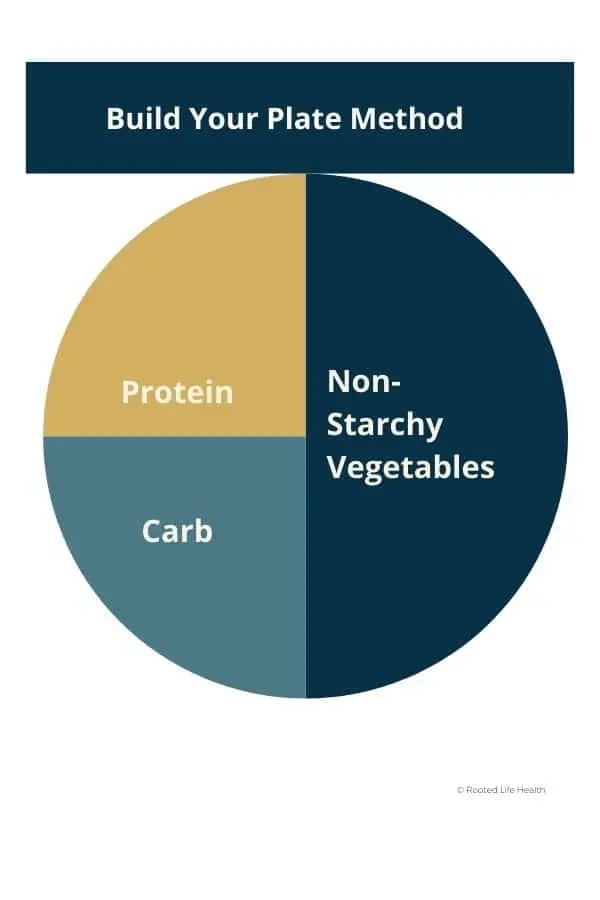
The goal is to avoid eating “naked carbs.” If you’re going to eat a bowl of rice or pasta, be sure to pair it with protein and fiber. At meals, I recommend eating equal parts carbohydrate and protein. For example, if a quarter of your plate is protein, then a quarter of your plate should be carbohydrates. Half of the plate should be non-starchy vegetables.
Step 3: Eat Energy-Dense Meals
To ensure you’re eating enough food throughout the day, I recommend eating energy-dense meals.
By following the “Build Your Plate” framework and being mindful of portion sizes, your meals will naturally become energy-dense. An example of an energy-dense dinner might be ½ chicken breast, ⅔ cup of basmati rice, ½ cup of cooked green beans, and ½ cup of cooked spinach. If you were to measure these food groups out on a plate, it would mirror the “Build Your Plate” example.
Your portion sizes may vary slightly from the standard recommendations, depending on your specific goals and energy needs.
The goal is to replace grazing and small, bite-sized portions with larger, energy-dense meals. If you find yourself skipping meals and grazing throughout the day, this change will help ensure that your body is getting the correct amount of nutrition. If you feel the need to eat or snack every 2-3 hours, consider adding more food to your main meals. The aim is to snack minimally and only as needed.
Step 4: If You Need to Snack
It can be a good idea to have a snack between lunch and dinner if you’re waiting more than 5 hours to eat. I like to think of this snack as an “insurance policy.” By having a snack, you may prevent overeating at dinner because you won’t be as hungry.
If you’re going to wait 6-7 hours between lunch and dinner, adding a snack can help. The goal is to avoid feeling “hangry” or overly hungry by dinner time.
This is also a great tip when you’re going out to eat. If you tend to overeat at restaurants, having a snack beforehand can help. This can prevent overeating when you’re out. You might also consider eating a green appetizer (like a small salad) at home before going out to help control your blood sugar.
Snacks are useful if you feel your energy dropping in the afternoon and start feeling hungry. Some people do really well with snacks, while others don’t need them. For some, snacking becomes more of a habit than an actual need.
Summing it Up
Balancing your blood sugar supports healthy energy, hormones, and weight. The steps you can take to balance your blood sugar include:
- Eating breakfast within the first hour of waking up.
- Balancing your plate with protein, carbohydrates, and fiber.
- Eating energy-dense meals instead of small snacks.
- Snacking when necessary.
By consistently practicing these steps to balance blood sugar, you will start to experience better energy, more mental clarity, and fat loss! Remember, the key to hitting your health goals is consistency. Practicing these steps every day can make a big difference in your health!
In Part 4, learn how meal timing impacts blood sugar timing!